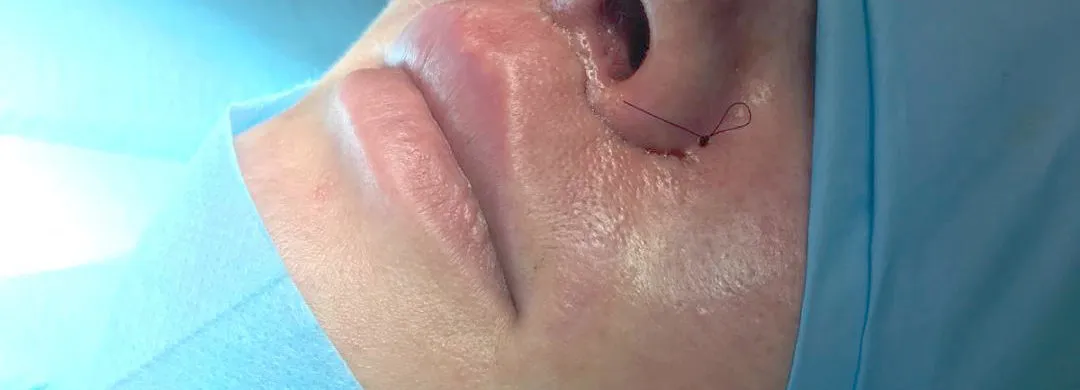
TLDR: Like any surgery, rhinoplasty carries risks. The most common include prolonged swelling, infection, bleeding, residual asymmetry, and breathing difficulty. Serious risks are uncommon when the surgery is performed by a certified specialist in an appropriate surgical setting. Knowing these risks is not meant to discourage you, but to help you make an informed decision and know which warning signs to watch for.
When a patient asks me about the risks of rhinoplasty, I always consider that one of the most important questions they can ask. A person who asks that question is making their decision responsibly.
My role as a surgeon is not only to operate. It is also to make sure the patient fully understands what is going to happen, what can go well, and what might turn out differently than planned. Without that complete information, informed consent is not truly informed.
I am going to describe the risks of rhinoplasty in the most honest and clear way I can.
Prolonged post-rhinoplasty swelling
Swelling is an inevitable part of the healing process after any surgery, and rhinoplasty is no exception. What many patients do not anticipate is that swelling can persist for many months before the final result becomes visible.
Swelling is most visible in the first few days. It then improves gradually. But the nose may retain some residual swelling, especially at the tip, for six to twelve months. In cases of thicker skin, the process can extend to eighteen months.
This is not a complication in itself. It is part of the healing process. But it is important to understand this in order to have realistic expectations about when you will see the definitive result.
How common are infections after rhinoplasty?
Postoperative infections following rhinoplasty are uncommon, but they do occur. They typically manifest as increased pain after the first few days, redness, local warmth, and fever. When detected early and treated appropriately with antibiotics, they generally resolve without lasting consequences. The Mayo Clinic lists infection among the recognized risks of rhinoplasty and emphasizes that close postoperative follow-up with the medical team is essential for early detection.
To minimize the risk of infection, it is essential to follow postoperative instructions rigorously: avoid inserting anything into the nose, keep the wound clean, avoid dusty or smoky environments, and stay away from extreme temperatures during the first few weeks.
Is there bleeding after rhinoplasty?
Minor bleeding during the first hours after surgery is normal. However, if bleeding is heavy or if significant bleeding occurs several days after surgery, you must contact the medical team immediately.
In some cases, a hematoma can develop, which is an accumulation of blood under the skin. Depending on its size, it may resolve on its own or may require a small procedure to drain it.
Is there bleeding after rhinoplasty?
One of the goals of rhinoplasty, beyond aesthetics, is to maintain or improve breathing function. However, there is a possibility that breathing may be affected after surgery.
This can happen due to prolonged swelling of the septum, excessive scar formation inside the nose, or a surgical correction that unintentionally modifies airflow. In cases where this occurs, a revision may be necessary.
Nasal asymmetry and unsatisfactory results
Residual asymmetry is one of the most frequently mentioned outcomes by patients after rhinoplasty. The nose is never perfectly symmetrical before surgery, and it will not be perfectly symmetrical afterward either. However, when asymmetry is more pronounced than expected, it can generate dissatisfaction.
Another unsatisfactory outcome is when the final appearance does not correspond to what the patient had in mind. This can occur due to differences in how the patient and surgeon interpreted the goals, complications in healing, or anatomical characteristics that limit what can realistically be achieved.
This is why detailed communication before surgery is so important. The patient and surgeon must share a clear understanding of what can realistically be achieved.
Changes in the sensitivity of the nose
After rhinoplasty, it is common for the nose, particularly the tip, to feel numb for weeks or months. This happens because some small nerve branches are affected during surgical dissection. In most cases, sensation returns fully over time.
In rare cases, areas of altered sensation may remain permanently.
Rhinoplasty Scars
In open rhinoplasty, the columella scar is unavoidable but typically becomes barely noticeable with time. However, in people with a tendency to form keloids or hypertrophic scars, the scar may be more visible and may require additional treatment.
Reactions to Surgical Anesthesia
Although uncommon, adverse reactions to general anesthesia can occur. This is why a complete anesthesia evaluation is performed before surgery to identify risk factors. It is essential that the patient inform the medical team about all medications they are taking, known allergies, and any relevant personal or family medical history.
How to Minimize the Risks of Rhinoplasty
The most effective way to minimize rhinoplasty risks is to choose a certified surgeon with demonstrable experience in this procedure, to operate in a clinic or surgical center with appropriate standards, to follow all preoperative and postoperative instructions rigorously, and to maintain open communication with the medical team throughout the entire process. The American Society of Plastic Surgeons recommends verifying that your surgeon is board-certified and that the procedure is performed in an accredited facility as two foundational steps for reducing the risk of complications.
If you want to better understand what patients actually experience during recovery, including how pain is managed day by day, this article on what rhinoplasty really feels like before, during, and after covers that in full detail.
If you have questions about the specific risks in your case, the most valuable thing you can do is speak with a specialist. Through Kurbuo, you can connect with verified surgeons who can evaluate your situation and guide you on the particular risks involved in your case, through a virtual medical consultation. The information you receive in that conversation is what allows you to decide with real knowledge, not with unanswered questions.
.webp)


.webp)