Colombia, Turkey, and Mexico are three of the most researched destinations for international patients evaluating rhinoplasty outside their home country. Each has its own characteristics in terms of cost, surgeon profiles, logistics, and postoperative experience. What does not change across any of the three is that the outcome depends primarily on the choice of surgeon and the setting where the surgery takes place. This article describes what each destination offers so you can make that evaluation with real information.
When a patient tells me they are considering having surgery in another country, the first thing I ask is what led them to consider that option. The answers vary: the cost at home is prohibitive, they know someone who had a good experience abroad, they came across information on social media, or they simply want to explore alternatives before deciding.
All of those reasons are valid. What I want to do here is give real context to that evaluation, because the information circulating online about medical tourism is uneven. There is a lot of marketing content and very little honest clinical analysis.
Colombia as a rhinoplasty destination
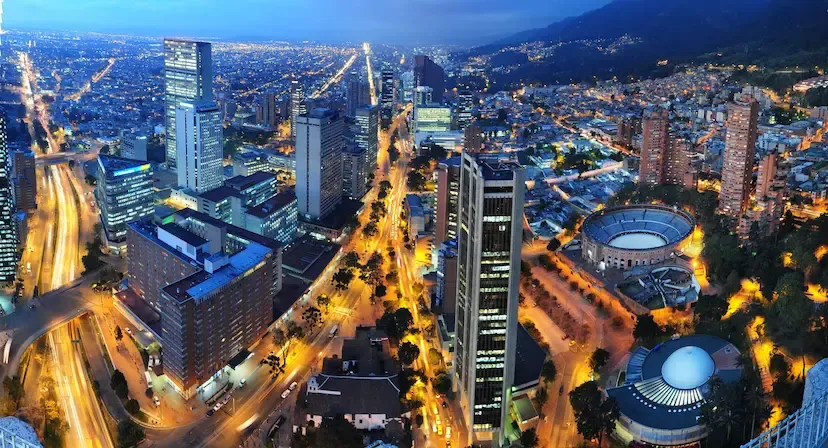
Colombia has consolidated its position as a medical tourism destination over the last decade. Bogotá and Medellín concentrate most of the high-level surgical offering, with specialists trained in recognized programs and clinics with infrastructure comparable to any Latin American medical reference center.
The cost of rhinoplasty in Colombia is significantly lower than in the United States or Europe. For a patient from Latin America or Europe traveling specifically for surgery, the price difference can comfortably offset the travel and accommodation costs. The minimum recommended stay is seven to ten days.
What characterizes Colombia as a destination is not just the price. It is the combination of high surgical volume that generates accumulated experience, a well-developed private clinic infrastructure, and a growing logistical offering oriented toward the international patient. For the complete picture of what the process from abroad looks like, you can read this guide on rhinoplasty in Colombia for international patients.
Turkey as a rhinoplasty destination
Turkey, and Istanbul in particular, has become one of the most globally cited destinations for aesthetic medical tourism. The country has a broad surgical offering and competitive prices. For European patients, the flight distance is comparable to or shorter than flying to Colombia.
The offering in Turkey is numerous and quality variability is considerable. There are very high-level clinics with internationally trained surgeons, and also offerings oriented more toward volume than toward personalized results. The language barrier can be a real factor for non-English-speaking patients, as not all surgeons work in Spanish.
One aspect patients frequently note after surgery in Turkey is a difference in the aesthetic standard some surgeons there apply relative to what the Latin American patient is looking for. That does not necessarily mean the result is poor, but it does mean that preoperative communication about goals must be especially clear and detailed.
Mexico as a rhinoplasty destination
Mexico has clear advantages for patients from the United States: geographic proximity reduces travel cost and time, and in the event of a postoperative complication, returning for a follow-up visit is more accessible.
Mexico City concentrates the country's highest-level offering. Tijuana, on the California border, is specifically oriented toward short-stay medical tourism from the US southwest. The offering in Tijuana is broad and prices are competitive, but quality variability is also high.
For patients from Latin America or Europe, Mexico and Colombia are destinations of similar accessibility in terms of flights. The choice between the two comes down primarily to the surgeon profile found in each country and the available coordination.
What is consistent across all three destinations
Regardless of the country you choose, there are factors that remain constant and that determine the outcome more than the geography of the destination. Surgeon certification, clinic accreditation, clarity of the surgical plan before surgery, the protocol for managing complications, and the postoperative follow-up system after you return home.
The International Society of Aesthetic Plastic Surgery and the American Society of Plastic Surgeons both agree that verifying surgeon credentials is the fundamental step no patient should skip, regardless of which country they are operating in.
Well-planned medical tourism is a valid and accessible option. Poorly planned medical tourism, where the decision is made on price alone without verifying the specialist or the setting, is where the complications that circulate on social media come from.
How Kurbuo supports that process
Kurbuo connects patients with rhinoplasty specialists in Colombia with verified credentials. The virtual medical orientation lets you evaluate the specialist, understand the surgical plan, and receive guidance on the complete process before making any travel decision. It is the first step that makes the rest of the process safer.

.webp)
.webp)