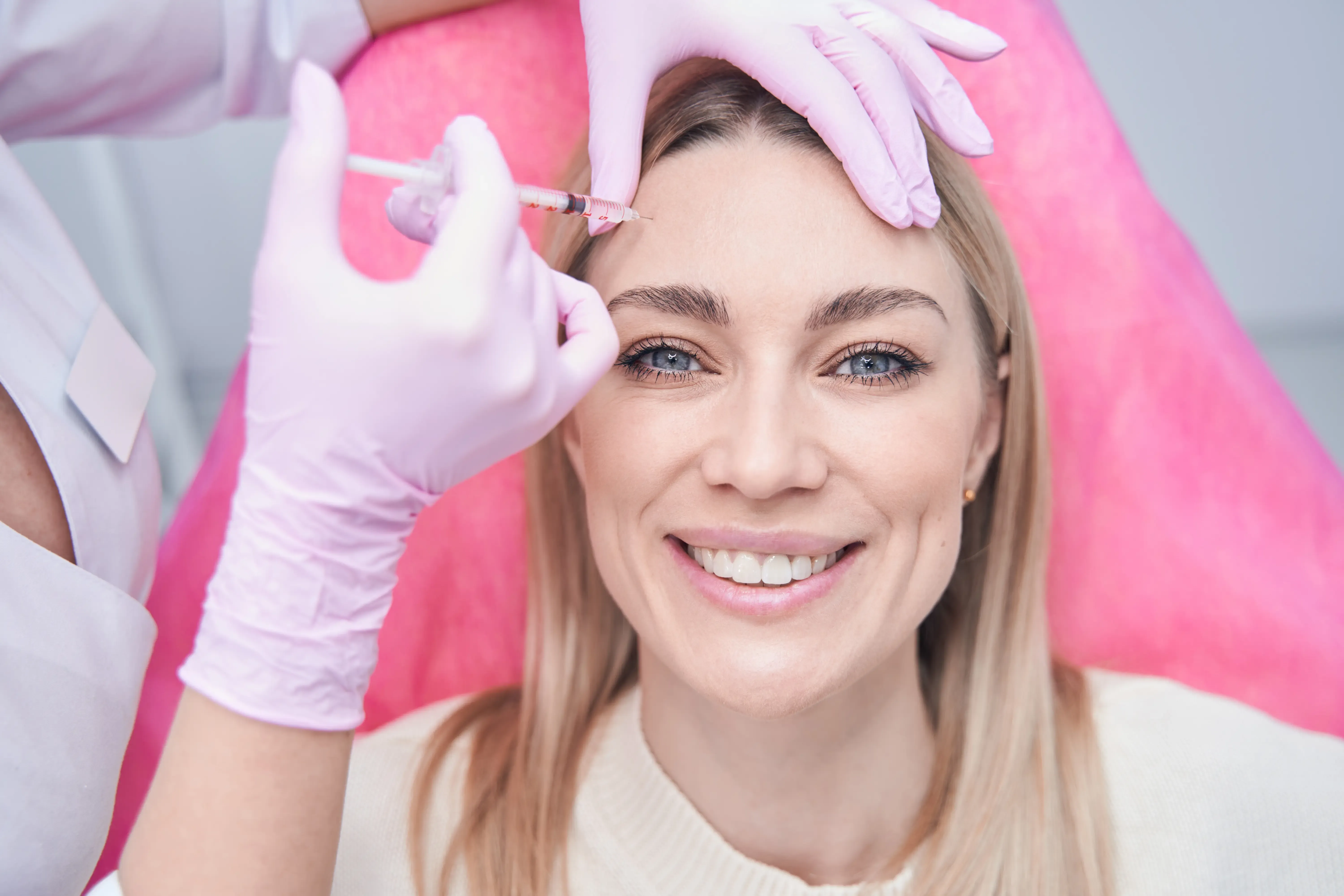
In recent years, minimally invasive aesthetic procedures have experienced exponential growth globally. Among them, botulinum toxin (popularly known as Botox) and dermal fillers have become the most requested treatments by both first-time patients and those seeking long-term aesthetic maintenance.
However, despite their popularity, there is widespread confusion between the two procedures. Many patients mistakenly believe they are interchangeable, that they serve the same function, or that one is "better" than the other. This lack of clarity can lead to unrealistic expectations, suboptimal results, or incorrect clinical decisions.
This article aims to educate, inform, and empower the patient by explaining, in a clear, medical, and ethical manner:
- What Botox is and how it works.
- What dermal fillers are and what they are used for.
- What their fundamental differences are.
- In which cases one, the other, or a combination of both is recommended.
- What risks exist and how to minimize them.
- How to make an informed decision with professional medical support.
At KURBUO, we believe that the best medical decision is an well-informed decision.
What is Botox and how does it work?
Medical Definition
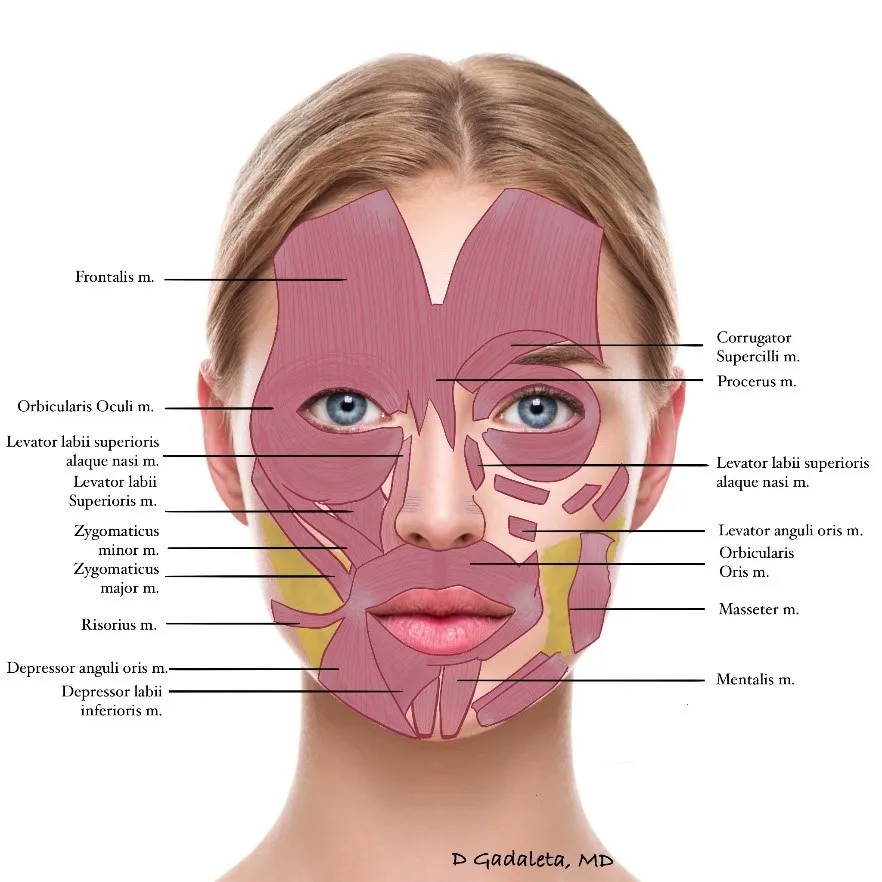
Botox is a purified form of botulinum toxin type A, a protein produced by the Clostridium botulinum bacteria. In aesthetic and therapeutic medicine, it is used in extremely controlled and safe doses.
Mechanism of Action
Botox acts by temporarily blocking the nerve signal that triggers muscle contraction. As the muscle relaxes:
- The skin above it smooths out.
- Dynamic wrinkles soften or disappear.
- The deepening of expression lines is prevented.
It is fundamental to understand that Botox does not fill, does not add volume, and does not change the structure of the face.
Dynamic vs. Static Wrinkles
- Dynamic wrinkles: Appear with movement (frowning, smiling, raising eyebrows) → Botox.
- Static wrinkles: Visible even at rest → Usually require fillers or other treatments.
Medical and Aesthetic Uses of Botox
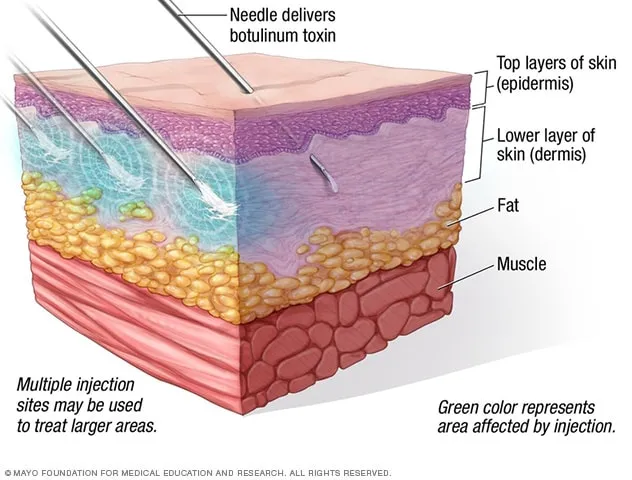
Most Common Aesthetic Indications
- Forehead lines
- Glabellar lines (frown lines)
- Crow's feet
- Subtle eyebrow lifting
- Gummy smile
- Neck (platysmal bands)
Medical Uses (Non-aesthetic)
Botox also has widely validated medical indications:
- Chronic migraine
- Bruxism
- Hyperhidrosis (excessive sweating)
- Muscle spasticity
- Blepharospasm
This reinforces its profile as a medical tool, not just a cosmetic one.
What are Dermal Fillers?
Definition
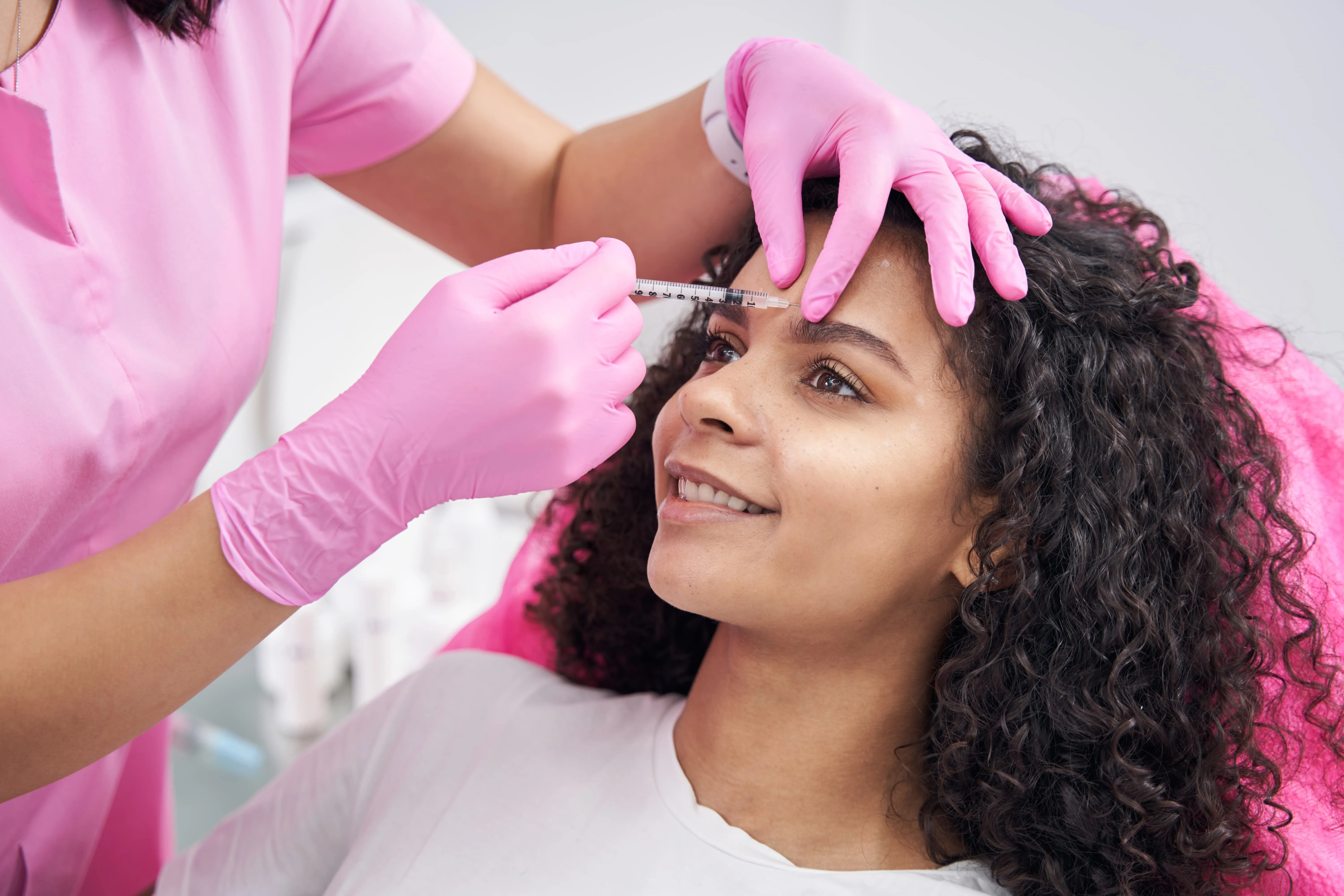
Dermal fillers are biocompatible substances injected into the skin or deep tissues with the goal of:
- Restoring volume
- Improving facial contours
- Correcting static furrows and wrinkles
- Rejuvenating specific areas
The most widely used substance globally is hyaluronic acid, although other types exist.
What is Hyaluronic Acid?
It is a molecule naturally present in the human body, responsible for:
- Hydration
- Elasticity
- Skin volume
With aging, its production decreases, which causes sagging and loss of volume.
Types of Dermal Fillers
- Hyaluronic Acid: Reversible, safe, temporary; ideal for the majority of patients.
- Calcium Hydroxylapatite: Stimulates collagen, longer duration, deeper use.
- Poly-L-lactic Acid: Biostimulator, progressive results, does not fill immediately.
- PMMA (Polymethylmethacrylate): Permanent, very selective use, requires advanced experience.
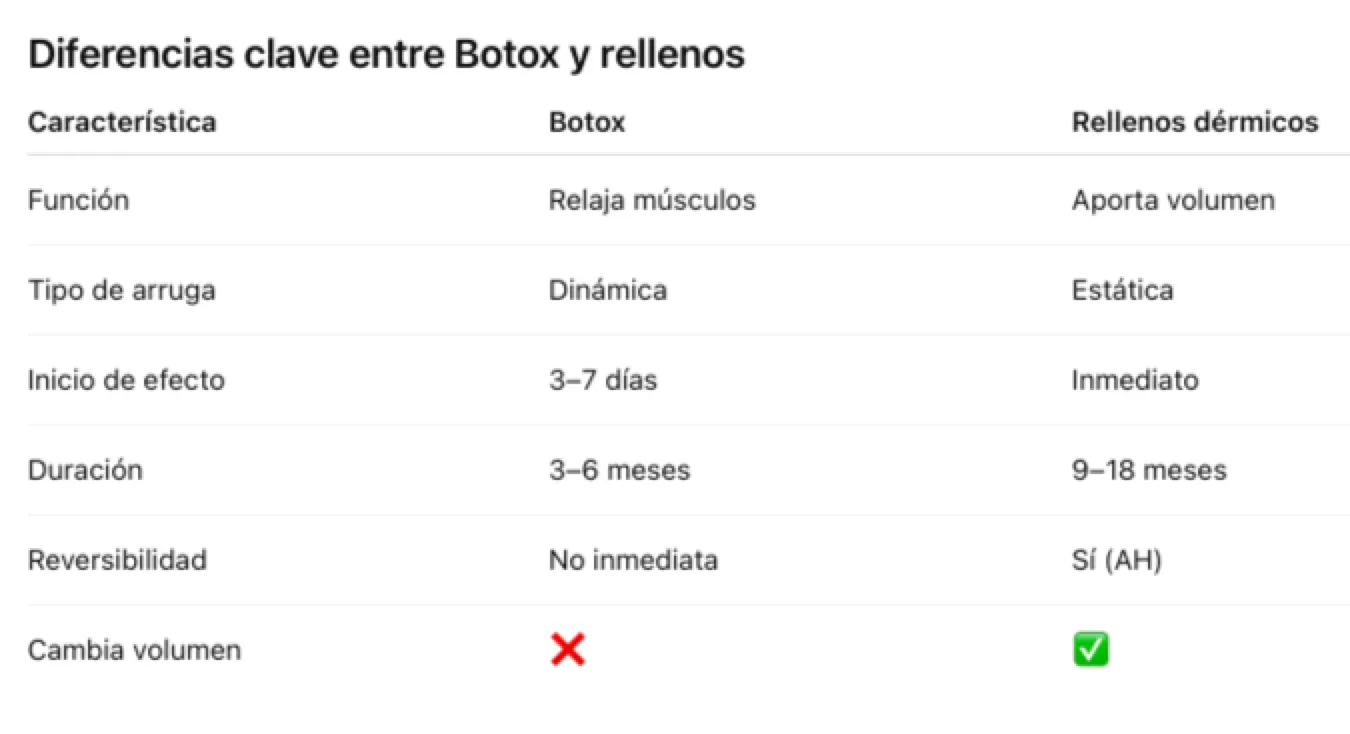
Key Differences Between Botox and Fillers
Characteristic: Botox / Dermal Fillers
¿Botox o rellenos? ¿Cómo decidir?
La elección no debe basarse en precio ni moda, sino en:
- Anatomía facial
- Edad biológica (no solo cronológica)
- Tipo de arruga
- Objetivo del paciente
- Evaluación médica profesional
Ejemplo clínico:
- Paciente joven con líneas al gesticular → Botox
- Paciente con surcos profundos y pérdida de volumen → Rellenos
- Rejuvenecimiento integral → Combinación
Combinación Botox + rellenos: enfoque moderno
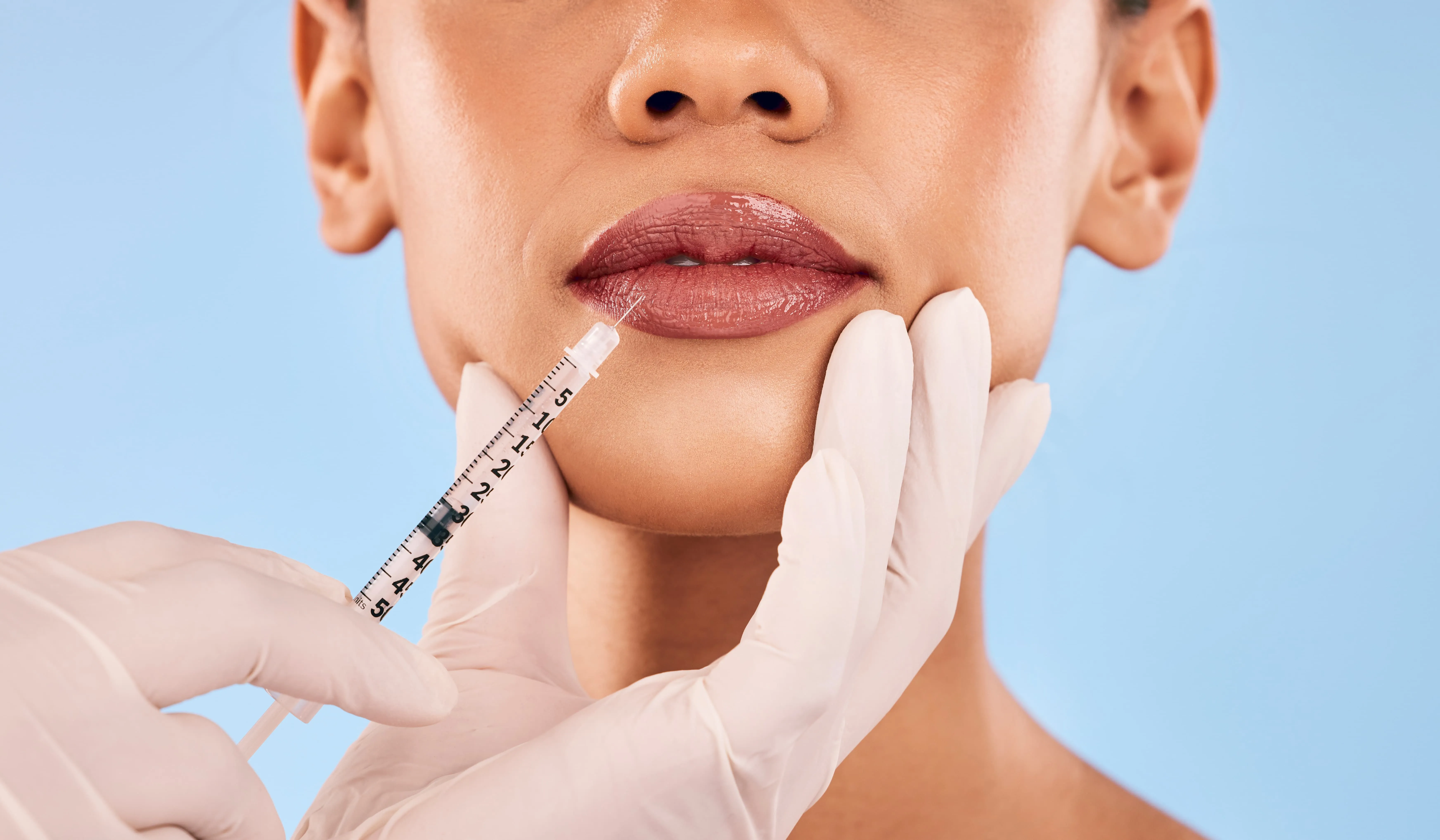
Modern aesthetic medicine does not choose one over the other, but rather integrates both for more natural, balanced, and long-lasting results.
Benefits of the combination:
- Harmonious results
- Less product required
- Prevention of aging
- Natural appearance, not “frozen”
Safety, Risks, and Medical Ethics
Every medical procedure carries risks. In aesthetics, the most common are:
- Inflammation
- Bruising
- Temporary asymmetries
Rare but serious risks include:
- Vascular occlusion (fillers)
- Eyelid ptosis (improperly placed Botox)
👉 The professional's experience and the correct indication are key.
Importance of Prior Medical Evaluation
At KURBUO, we promote medical teleconsultation as a responsible first step:
- Facial evaluation
- Expectation analysis
- Medical history
- Personalized plan
This reduces risks and improves outcomes, even before the in-person procedure.
Botox and fillers do not compete; they complement each other. Understanding their differences is the first step toward a safe, ethical, and satisfying aesthetic experience.